Adding an AI voice agent to a business phone system raises a fair security question, and it deserves a direct answer rather than a reassurance: does this make voice-cloning fraud more likely? The short answer is no, but the reasoning matters, because voice cloning and AI call-answering are two different things that get conflated simply because they both involve “AI” and “phone calls.”
What Voice-Cloning Fraud Actually Targets
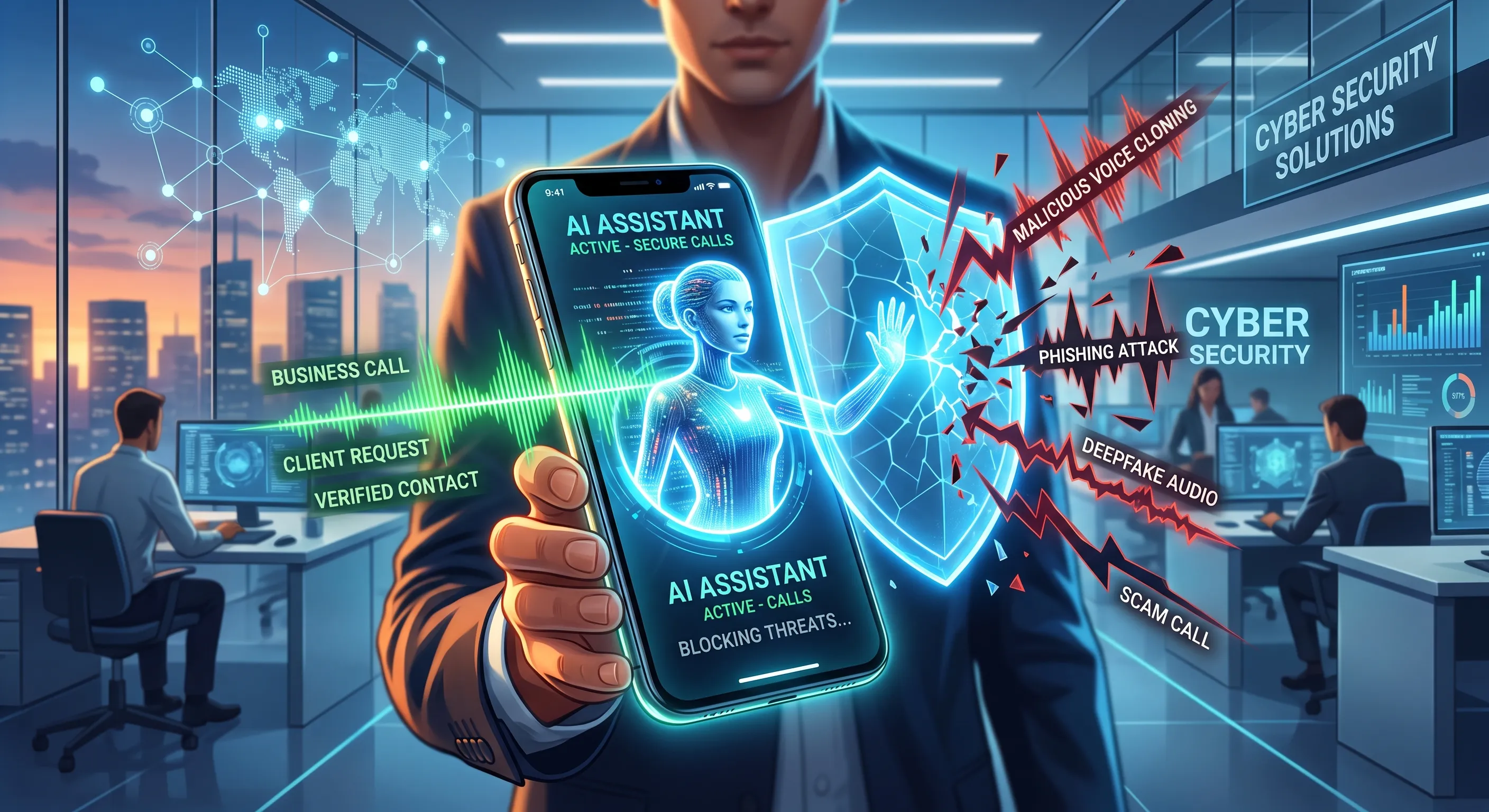
Voice-cloning fraud works by an attacker generating synthetic audio that sounds like a real person — typically an executive, a client, or another trusted contact — to authorize a fraudulent wire transfer or extract sensitive information over the phone. CelereTech’s own AI security guidance for Chicagoland businesses covers this directly: attackers commonly harvest the voice samples they need from public sources like earnings calls, LinkedIn videos, or voicemail greetings, since a few seconds of clear audio is often enough to generate a convincing clone. The target of that attack is the person being impersonated, not the system that happens to answer a phone.
Why an AI Answering Service Isn’t the Same Exposure
An AI voice agent that answers your business’s incoming calls doesn’t generate new voice samples for an attacker to clone, and it isn’t the identity being impersonated in a fraud attempt — it’s the opposite role, receiving calls rather than being spoofed on one. Conflating “AI answers our phone” with “our phone system is now vulnerable to AI voice fraud” treats two unrelated categories of AI as if they were the same risk. They aren’t. The real question worth asking about an AI voice agent isn’t whether it enables voice cloning — it’s whether it’s configured with the right scope and escalation rules, which is a governance question familiar from any other automated system.
The Guardrails That Actually Matter
Orbit AI, CelereTech’s AI voice agent, operates inside guardrails defined during setup and escalates to a person whenever a request falls outside what it’s configured to handle — it doesn’t guess on sensitive topics, and confidence thresholds that determine when it hands off are tunable to your business. That configuration is where the real security conversation belongs: what can the AI act on directly, what gets routed to a person, and how cautious is the escalation threshold. See our Orbit AI FAQ for more on how that’s set up in practice.
The Audit Trail an AI-Answered Call Actually Creates
One underappreciated angle: every call Orbit AI handles produces a post-call transcript, summary, and recording, which creates a more consistent record than relying on a staff member’s notes or memory. That’s a security asset, not a liability — a reviewable transcript of exactly what was said and requested on a call is more useful after the fact than an unrecorded human interaction would be, precisely when a business needs to reconstruct what actually happened.
The Defense That Doesn’t Change
Whether a call is answered by a person or by Orbit AI, the standard defense against voice-cloning and impersonation fraud stays the same: callback verification through a known, independently-confirmed number before acting on any financial request or sensitive change received by phone. That control lives outside the phone system entirely, in the business process around wire transfers and account changes, and it doesn’t get weaker or stronger because an AI is doing the initial call handling. If anything, a scoped AI voice agent removes one variable from the equation — Orbit AI isn’t configured to authorize wire transfers or account changes over the phone in the first place, so the specific transaction types voice-cloning fraud targets never reach it as something it could act on directly. Those requests are exactly the kind that fall outside its defined scope and route to a person, who then applies the same callback-verification process your business already has in place.
Why the Conflation Happens Anyway
It’s worth naming why “AI answering our phone” and “AI voice fraud” get lumped together so easily: both involve synthetic or automated voice technology, and both are relatively new enough that most businesses haven’t had to reason through the distinction carefully before. But the two technologies solve opposite problems. Voice cloning is built to deceive — to convince a listener that a fake voice is a real, specific person they trust. An AI voice agent like Orbit AI is built to be transparent about what it is and to hand off the moment a conversation needs judgment it isn’t equipped to provide. Treating them as the same risk category leads to the wrong mitigation: a business that avoids AI call-answering out of voice-cloning concerns hasn’t actually reduced its voice-cloning exposure at all, since that exposure comes from public voice samples and social engineering, not from anything related to how inbound calls get answered.
What a Business Should Actually Verify Before Adopting an AI Voice Agent
The useful due-diligence questions aren’t about voice cloning at all — they’re about scope and escalation, the same categories that matter for any automated system handling customer interactions. Ask what Orbit AI is configured to act on directly versus what it routes to a person. Ask how confidence thresholds are set, and whether they can be tightened for a business that wants a more conservative configuration. Ask what the transcript and recording retention looks like, since that record is itself a security asset if your business ever needs to reconstruct what was said on a call. None of those questions have anything to do with whether adding Orbit AI makes your executives easier to impersonate — because it doesn’t.
How CelereTech Approaches This
CelereTech configures Orbit AI’s scope and escalation rules specifically for your business, and we’re direct about where the real security work sits — in guardrail configuration and callback verification processes, not in a general anxiety about “AI on the phone.” If voice-cloning fraud and AI-powered threats are a broader concern for your business, our AI Security Threats guide covers the full landscape beyond phone-answering specifically.
Request a demo of Orbit AI if this is the question standing between you and adding an AI voice agent to your phone system.